Losing or damaging one or more teeth affects not only your appearance but also your ability to chew and your overall oral health.
At SmilesDent Alameda, in Alameda de Osuna (Madrid), we help each patient regain the dental aesthetics and function they deserve.
Dental prosthetics at our clinic
Intraoral scanner: a better way to take impressions
Our intraoral scanner has changed how prostheses are made. Instead of uncomfortable pastes and moulds, a simple scan produces a detailed 3D image of your mouth, allowing a precise fit and greater comfort.

Custom solutions for every need
Every mouth is unique. Whether you need a single crown, a bridge for several teeth or a full denture, we provide tailored solutions that feel and look like your own teeth.
Our commitment: your smile
We integrate up-to-date dental technology and techniques to give you the best prosthetic care, guiding you every step of the way towards a renewed, fully functional smile.
What types of dental prosthesis are there?
- Crowns: cover a badly damaged tooth or an implant.
- Bridges: replace one or more teeth, supported by neighbouring teeth or implants.
- Fixed implant-supported prosthesis: a full arch screwed onto several implants.
- Partial or full removable dentures: taken out for cleaning; they can be retained on implants (overdenture) for stability.
Crown, bridge or implant?
If the tooth keeps a healthy root but has lost a lot of structure through decay, a fracture or a root canal, a crown protects it. If the tooth is missing, an implant avoids filing down the neighbouring teeth; a bridge is an alternative when the adjacent teeth already need crowns or when an implant is not possible.
The decision depends on the bone, the gums, the state of the neighbouring teeth and your preferences, and we explain it with the scan in front of you, comparing the advantages and limitations of each option. The UK's NHS lists the same alternatives for replacing teeth: bridges fixed to the neighbouring teeth, implants anchored in the bone and removable dentures.
Who will treat you
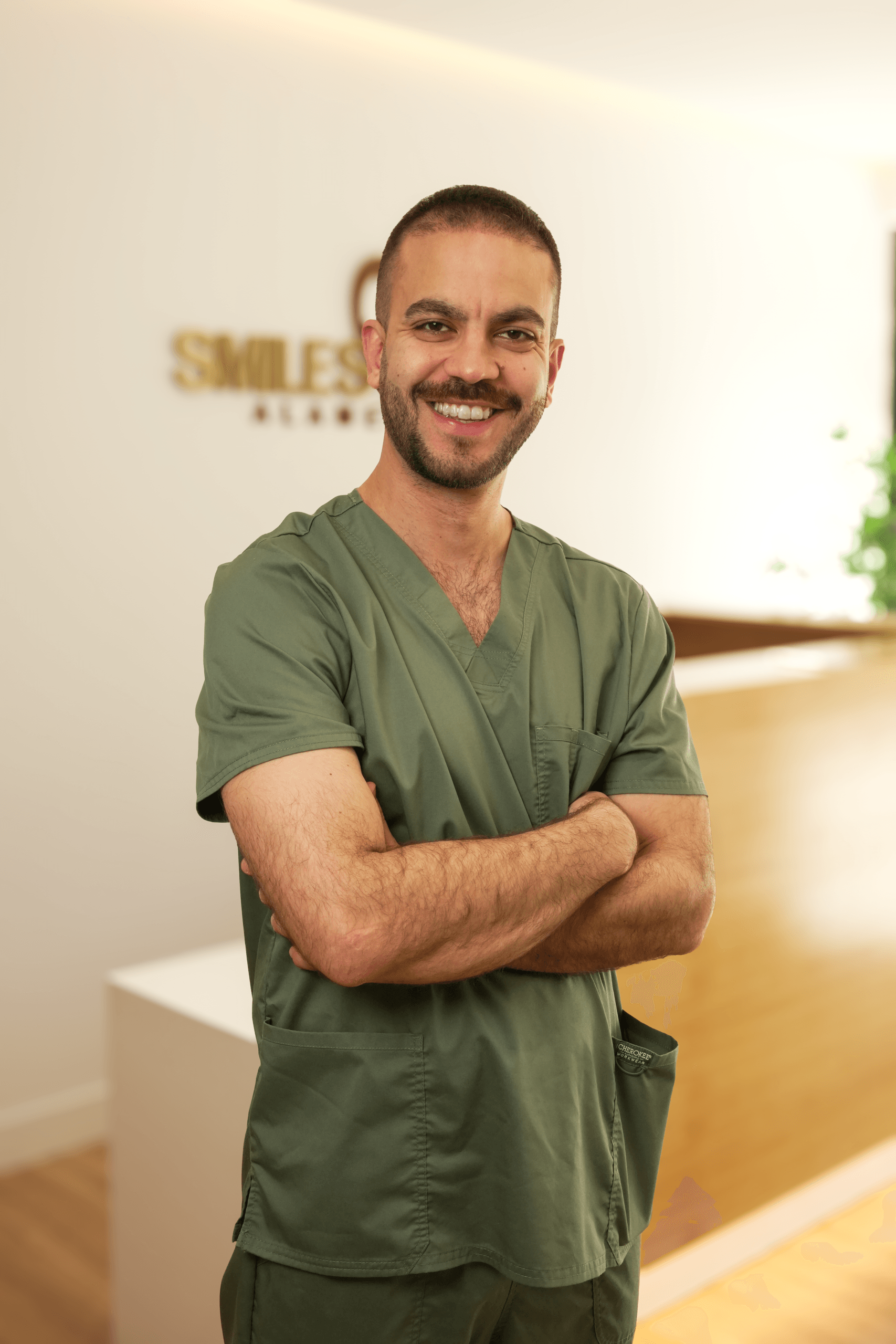
Dr. Muhammad El-Hachem Debek
Medical director · Prosthodontics and aesthetics
Registration no. 28013715
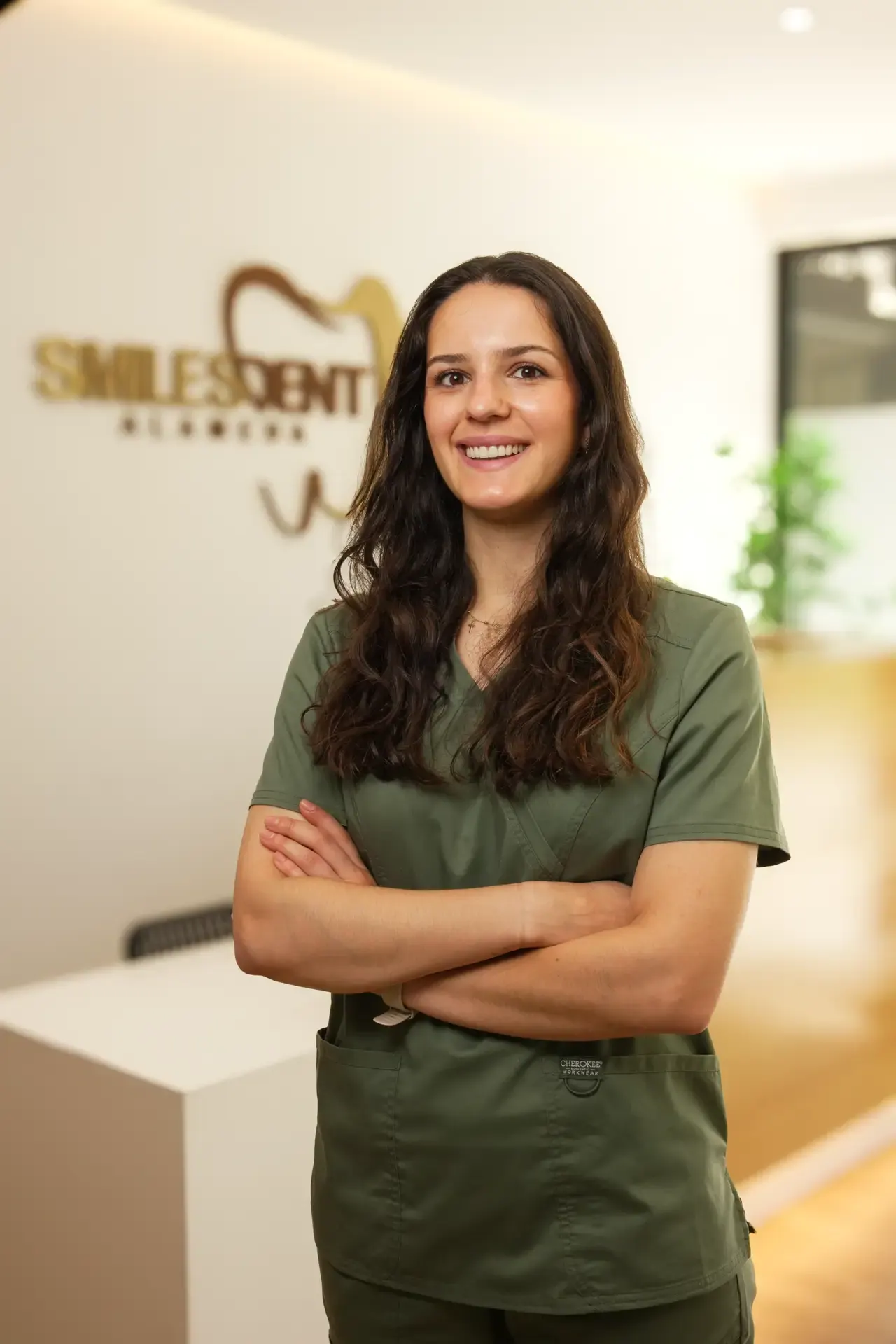
Dra. Elena López González Quevedo
General dentist and prosthodontist
Registration no. 28017376
Frequently asked questions about dental prosthetics
How long do dentures last?
With proper care, dental prostheses can last many years, but how long depends on the type of prosthesis, the materials and, above all, hygiene and check-ups. Removable prostheses need periodic adjustments or relining because the bone and gums change over time, and crowns and bridges require the teeth or implants that support them to stay healthy. During your consultation we give you detailed information on how to look after your prosthesis and what to expect in your case. The UK's NHS notes that dentures can last years if looked after well and that immediate dentures, made within a few days, often need adjusting or replacing up to a year later because the mouth changes shape as it heals.
Are dentures comfortable?
The prostheses we design are customised for each patient, which favours an optimal fit. At first an adjustment period may be needed: it is normal to find it bulky, to produce more saliva or to need a few days to speak and chew naturally. Over time, many people find their prostheses feel as natural as their original teeth. If a spot rubs or bothers you, it is adjusted at a check-up; there is no need to wait until a sore appears. The UK's NHS notes that it can take a few weeks to get used to them and advises practising putting them in and taking them out and eating soft foods at first.
How are dentures cleaned and maintained?
It depends on the type. Removable prostheses are cleaned daily with a brush and mild soap. The UK's NHS recommends not using toothpaste, which can damage them, and not wearing them overnight unless the dentist advises it, because trapped food increases the risk of gum infections and decay. Crowns, bridges and fixed prostheses on implants are brushed like teeth and need interdental cleaning (interdental brushes or a water flosser), because plaque that builds up around them inflames the gum. We give you detailed instructions and product recommendations for each type of prosthesis, and regular check-ups complete the maintenance.
What materials are used to make dental prostheses?
We use high-quality materials, such as porcelain, zirconia and acrylic resins, depending on the type of prosthesis and each patient's needs. Porcelain and zirconia are used mainly for crowns and bridges because of their natural look and strength; acrylic resins are common in removable and temporary prostheses because they are easy to adjust. At the consultation we go through the options, with their advantages and limitations, and recommend the most suitable material for your case, taking into account your bite, the look you want and the area of the mouth.
Sources and further reading
General patient information from public bodies and scientific societies. Your own case is always assessed at a consultation.
- Dentures — NHS (Reino Unido)
- Dental treatments — NHS (Reino Unido)