

Healthy gums are essential for a healthy, lasting smile. We provide care focused on the prevention, diagnosis and treatment of diseases affecting the gums and the structures that support the teeth.
Periodontal treatments at our clinic
Gingivitis: the first line of defence
Gingivitis, an inflammation of the gums caused by plaque build-up, is a warning sign. Without proper care it can progress. We treat it and teach patients how to prevent it with good oral hygiene and regular check-ups.
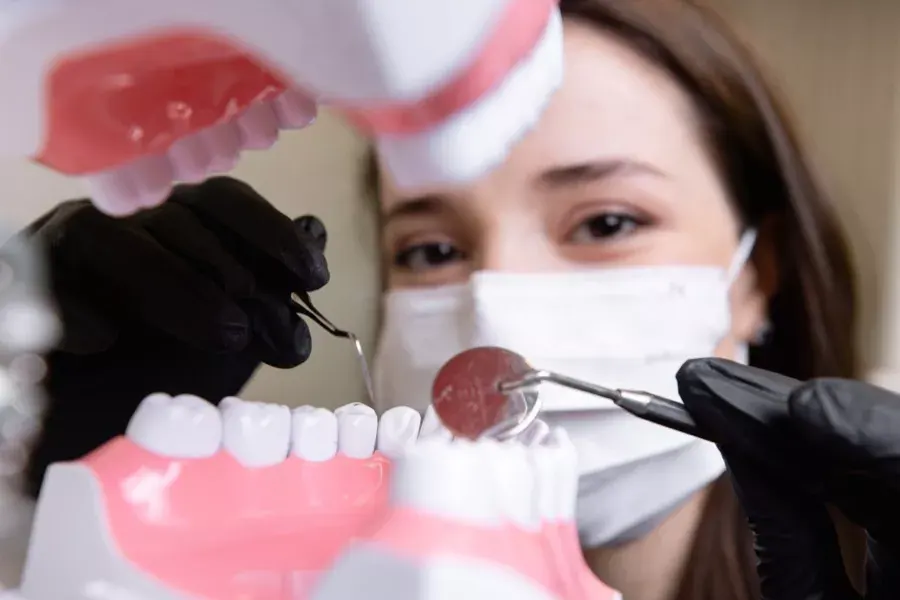
Periodontitis: a silent threat
Periodontitis is untreated gingivitis that has progressed: it affects the gums and the bone supporting the teeth. We use advanced techniques to halt it, promote regeneration of the affected tissue and, if needed, plan restorative solutions.
Prevention: the best strategy
Our philosophy is based on prevention: a consistent oral care routine and regular check-ups to detect early signs of problems.
How is periodontitis treated?
Treatment depends on how advanced the disease is. It starts with an examination of the gums, with probing and X-rays. Then scaling and root planing is usually carried out: a deep clean below the gum line, under local anaesthetic, to remove tartar and bacteria from the surface of the root.
After a while the gum is reassessed and, in advanced cases, periodontal surgery or regeneration of lost bone may be considered. All of this is combined with a cleaning routine at home adapted to your mouth, which we teach you. The UK's NHS distinguishes stages: at first hygiene advice (such as interdental brushes), stopping smoking and cleanings with a hygienist are enough; if the disease is severe, a deep clean below the gum, antibiotics, surgery or even removing a tooth may be needed.
Why is periodontal maintenance so important?
Because periodontitis is a chronic disease: it can be controlled, but not cured for good. After treatment, regular check-ups and cleanings are what stop it from advancing again and allow any reactivation to be caught in time.
The frequency is adjusted to each patient according to their risk, which depends on factors such as smoking, hygiene or certain general illnesses. Abandoning maintenance is the most common way of losing teeth that had already been treated.
How are gums related to implants?
The bacteria that cause periodontitis also attack the bone and gum around implants, a problem called peri-implantitis. That is why, before an implant is placed, the gums must be healthy and stable.
Having had periodontitis does not rule you out for an implant, but you need to have treated it and to follow a stricter follow-up afterwards. We assess it at the examination and on the X-ray before planning anything. A Cochrane review (2012) notes that implants, like natural teeth, can be lost to gum disease.
Who will treat you

Dra. María Luz Gil Jiménez
Implantology and periodontal surgery
Registration no. 28010628
Frequently asked questions about periodontics
How can I tell if I have gum problems?
The most common symptoms are red, swollen gums or gums that bleed easily when you brush, persistent bad breath, teeth that look longer because the gums have receded, and teeth that move. Some forms of the disease advance without pain, so the absence of discomfort does not mean the gums are healthy. These are the same signs listed by the UK's NHS, which adds that gum disease can end in loose teeth that fall out and in a dental abscess. If you notice any of these symptoms, it is essential to see a professional, who will examine your gums and tell you what stage they are at.
Do gum problems only affect my oral health?
No, periodontal health can influence general health. Gum disease has been linked in studies to other conditions, such as cardiovascular disease and diabetes, although the relationship is complex and does not mean one always causes the other. In the case of diabetes the link runs both ways: poorly controlled diabetes worsens the gums, and inflamed gums make it harder to control blood sugar. So if you have any general illness, your dentist should know about it.
What can I do to prevent gum disease?
Good oral hygiene is essential. The UK's NHS explains that gum disease is caused by a build-up of plaque and recommends brushing at least twice a day with fluoride toothpaste, cleaning between the teeth daily, and seeing the dentist and hygienist regularly, especially during pregnancy or with type 2 diabetes. Giving up smoking and controlling general conditions such as diabetes also lowers the risk. If you have already had gum problems, how often you come for check-ups is adjusted to your case.
Sources and further reading
General patient information from public bodies and scientific societies. Your own case is always assessed at a consultation.
- Gum disease — NHS (Reino Unido)
- Intervenciones para la reposición de piezas dentarias faltantes: tratamiento de la periimplantitis — Cochrane (in Spanish)