
The health and aesthetics of your smile go hand in hand, and at SmilesDent Alameda we are committed to offering you modern orthodontic solutions for both. Proper alignment affects not only the appearance of your smile but also its function and the overall health of your mouth.
Orthodontic treatments at our clinic
Invisible orthodontics: discreet and practical
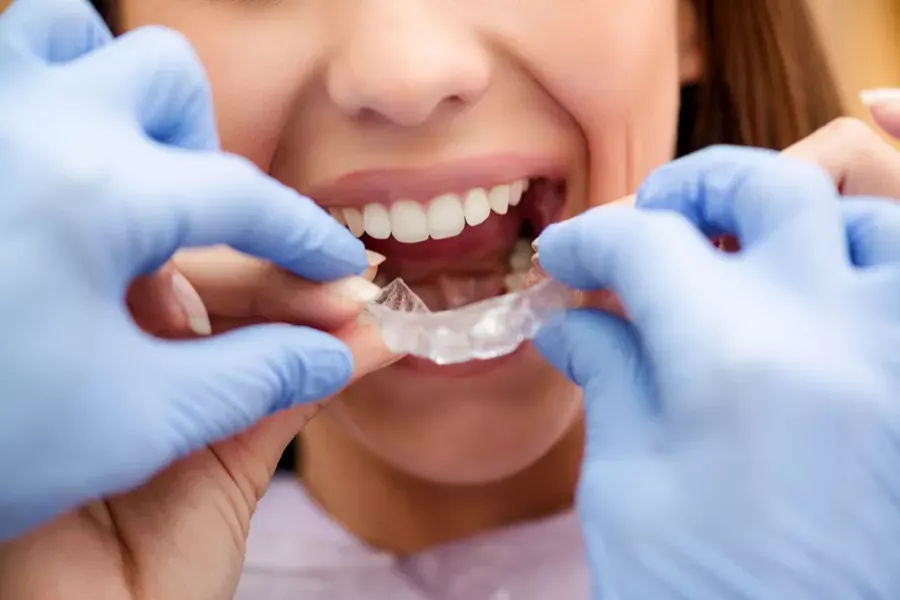
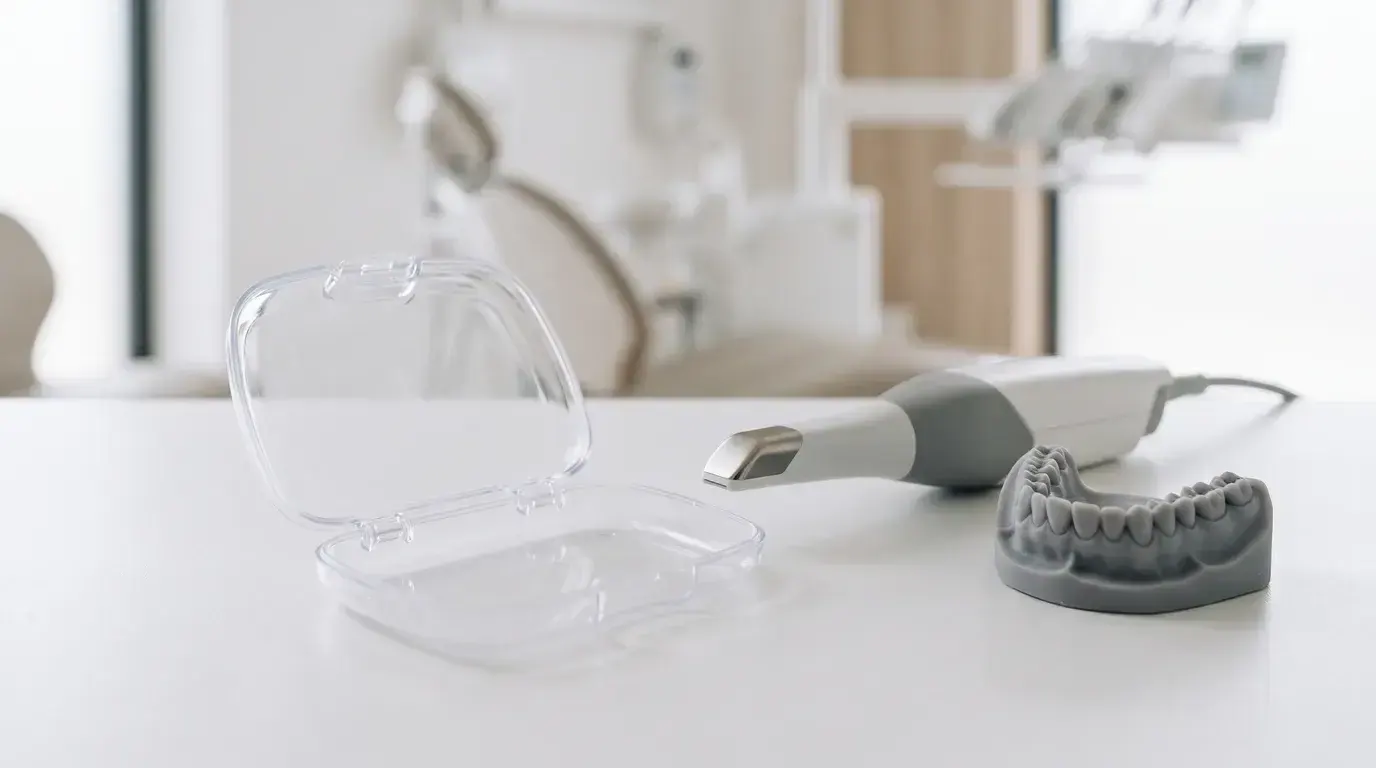
Clear aligners are one of the most requested options at our dental clinic in Alameda. They are discreet and effective, and because they are removable you can eat normally and clean your teeth easily.
Fixed braces: solid and reliable
Metal braces, while traditional, have kept evolving. They remain an ideal choice for cases that require more extensive or complex tooth movement.
Damon System: self-ligating braces
The design of Damon self-ligating braces aims to reduce friction between the wire and the bracket. Studies have not shown that self-ligating braces shorten treatment or reduce discomfort compared with conventional ones, but they are a common option and the orthodontist assesses in your case whether it is the most suitable.
Looking for a trusted orthodontist in Alameda de Osuna?
Our orthodontists are committed to ongoing training. Together with the technology we use, this lets us offer precise solutions tailored to your needs.
When is orthodontic treatment needed?
Orthodontic treatment is indicated when teeth are crowded or spaced, when the bite does not fit (crossbite, open bite or deep bite) or when children show jaw growth problems. Beyond the look of your smile, straight teeth are easier to keep clean, because it is simpler to brush and floss between well-aligned teeth, and they share chewing forces better. It is not only for teenagers: at SmilesDent Alameda we treat children, teenagers and adults, and for adults there is no age limit as long as gums and bone are healthy. The technique (clear aligners, metal braces or the Damon System) is chosen after studying your case at the first visit, which is free and without obligation.
At what age should a child be assessed?
During childhood, before all the baby teeth have been replaced: interceptive orthodontics is usually considered between 8 and 10 years of age, takes advantage of growth to guide jaw development and can simplify later treatment. In some children this early phase splits treatment into two stages separated in time. It does not mean every child needs an appliance at that age: the check-up is precisely how we find out whether to start now, wait or monitor progress. For adults there is no age limit if gums and bone are healthy, and the technique is chosen case by case. To know when to book your child's first assessment, see also our guide to children's dental check-ups.
Why do I need retainers afterwards?
Because teeth tend to drift back to where they were, a phenomenon called relapse. When treatment ends, retainers are fitted; they can be fixed (a thin wire bonded behind the teeth) or removable (for example clear retainers or Hawley-type ones) and are kept long term with regular check-ups. Your orthodontist will tell you which one suits you and for how long, as there is no single timeframe. If a retainer breaks, comes unbonded or is lost, book an appointment as soon as possible rather than waiting, so that your teeth do not move. You can read more in our guide to dental retainers. The UK's NHS says the same: after the brackets are removed a retainer is needed so that the teeth do not move back to their original position, and the orthodontist says for how long.
Who will treat you
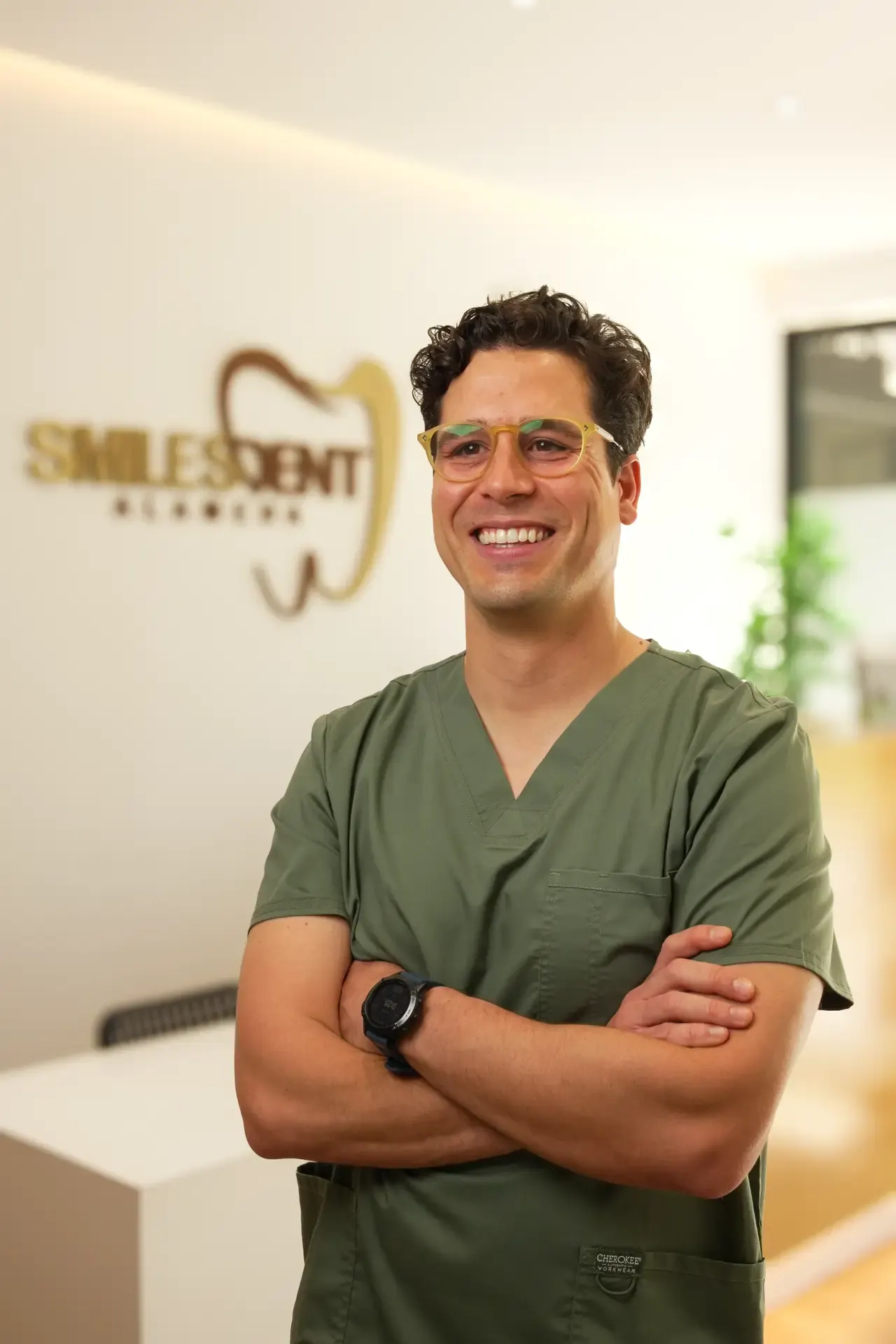
Dr. Carlos Julián Díaz Sánchez
Orthodontics and Dentofacial Orthopaedics
Registration no. 28011252

Dr. Muhammad El-Hachem Debek
Medical director · Prosthodontics and aesthetics
Registration no. 28013715
Frequently asked questions about orthodontics
How long does orthodontic treatment last?
It depends on the case: the complexity of the problem, your age and stage of growth, the technique chosen and how consistent you are with elastics, aligners and appointments. As a guide, treatment with clear aligners (Invisalign) can last between 12 and 18 months and traditional braces between 18 and 24 months; a systematic review of clinical studies put the average for complete treatments with braces at around 20 months. These are averages, not guaranteed timeframes. On top of that active time come the initial assessment and retention, which continues long term. In children, interceptive orthodontics can split treatment into two stages. After studying your case, your orthodontist will give you a personalised estimate; you can read more in our guide to how long orthodontic treatment lasts. For reference, the UK's NHS says that fixed braces are usually worn for 1 to 2 years, with a check-up every 6 to 8 weeks.
Is orthodontic treatment painful?
It is normal to feel pressure or discomfort during the first days after the appliance is fitted and after each adjustment or change of aligner. These sensations are usually temporary and subside within a few days; if a bracket rubs your cheek, orthodontic wax usually helps. Technologies such as the Damon System, with self-ligating braces, are designed to minimise discomfort. If the pain is severe, does not go away or a sore does not improve, do not wait for your next appointment: contact your orthodontist so they can check and adjust it. The UK's NHS notes that teeth can ache for a few days after the braces are fitted and that eating soft foods in the meantime helps.
Can I choose between Invisalign and fixed braces?
Both options are effective, and the choice depends on the complexity of the case, your needs and your habits. Clear aligners are removable and barely noticeable, but they only work if you wear them for the hours prescribed each day. Braces, metal or self-ligating Damon System ones, are fixed and do not depend on you remembering to put them in. In some complex cases fixed braces are the most suitable option, and in others aligners solve the problem without brackets. At the first visit, the orthodontist will assess your situation and recommend the best option to achieve the result you are looking for.
Sources and further reading
General patient information from public bodies and scientific societies. Your own case is always assessed at a consultation.
- Braces — NHS (Reino Unido)